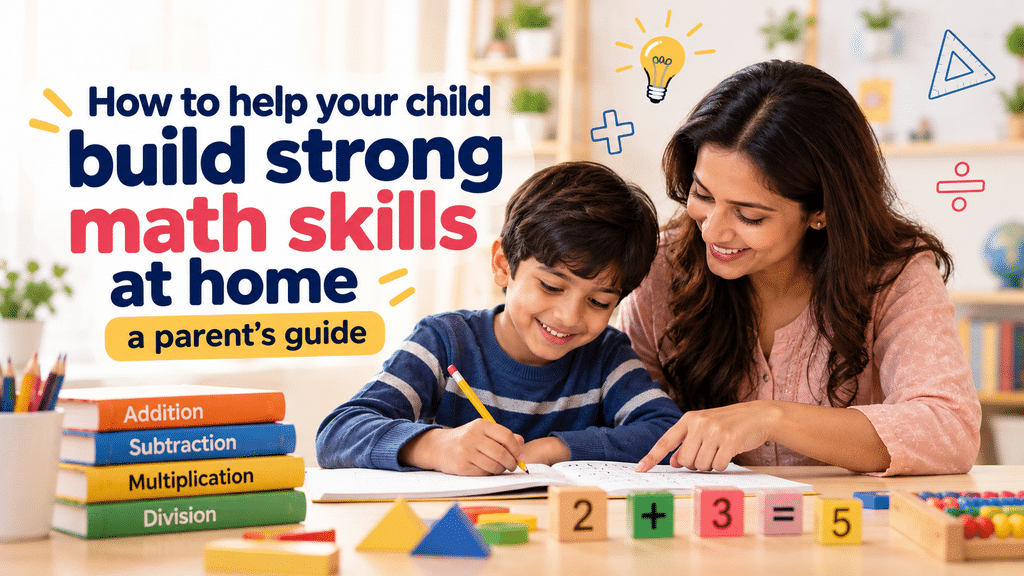
If you have ever caught your child using their fingers to solve a basic addition problem under the kitchen table, or if they completely freeze the moment a word problem appears on the page, you have seen early math anxiety. In 2026, math looks completely different from the way we learned it in school, which makes helping your teenager or young child feel incredibly intimidating for parents. If your goal is to genuinely improve a child’s math skills without turning your evening into a stressful battle of wills, you need a strategy that mixes practical play with casual consistency.
You don’t need a formal classroom setup or expensive class to build deep computational confidence; here are some of the best ways to improve math skills for kids using ordinary items around your house:
What makes these activities so effective is that they strip away the pressure of a school text. When a child sees that fractions are just tools used every day, their brain completely stops panicking. They stop worrying about getting it wrong and focus more on the actual logic of the puzzle.
However, if your child is dealing with severe conceptual gaps or needs a heavier academic challenge, weaving games into your weekend routine is only the first step. To sustain that moment, every parent needs to combine home activities with specialized math enrichment programs for kids or targeted math tutoring for kids online to ensure they get the precise conceptual clarity they need to excel in the classroom.
Finding a reliable way to sustain math learning for kids comes down to short, high-energy interactions rather than painful weekend cram sessions. Keep your home sessions brief, around ten minutes- and step back the moment you notice heavy frustration setting in. Small, consistent wins build the exact emotional resilience children need to handle tougher equations when they step into a school classroom.
When offline puzzles aren’t enough to close specific academic gaps, bringing in structured digital guidance can change their entire trajectory. Moving your child past generic learning apps and introducing them to professional online math classes for kids gives them a completely fresh, unbiased perspective on numbers.
If you want a structured, stress-free way to accelerate your child’s academic growth, professional guidance can lift the burden off your shoulders. At Jainam Classes, we specialize in turning abstract math anxiety into genuine logical excitement through customized virtual mentoring.
1. What is the absolute best age to start building math skills at home?
You can introduce basic sorting, pattern recognition, and counting games as early as toddlerhood.
2. How many minutes a day should parents dedicate to math practice?
Keep it brief; spending just 10 to 15 minutes of focused, stress-free daily practice yields significantly better results than forcing an exhausting hour-long study marathon when everyone is already tired from school.
3. Are online math tutoring modules effective for young beginners?
Yes, but only if the sessions are completely live and interactive. At Jainam classes, our specialized technology mentors use real-time digital tools with broad and engaging classes to ensure your child actively participates instead of sitting as a passive viewer.
4. What should I do if my child openly claims they “hate maths?”
Acknowledge their frustration instead of dismissing it. Immediately drop the traditional paper-and-pencil worksheets and switch directly to tactile building blocks, cooking metrics, or physical sports statistics to lower their stress walls.
5. When is it time to look for professional math tutoring for kids online?
If the nightly homework routine ends in tears, if your child shows severe anxiety before school tests, or if they are consistently trailing behind their grade level. It is best to get outside support before the conceptual gap widens further.