Published on December 9, 2025 | By Jainam Online Classes
Developing logical thinking through short mathematical logical puzzles with answers is interesting, and regular practice for mastering mental maths can become a habit for young kids and children. Math puzzles are the best gifts parents can give their children for learning and fun. At Jainam Online Classes, we recommend five compact, stimulating puzzles that sharpen reasoning, encourage pattern recognition, and build confidence—all while keeping learning enjoyable and memorable. These are effective in creating your child’s mental toughness, and they open the door to fun in mental mathematics for your children.
In this blog, we will look at some of the top 5 effective math puzzles, which will boost your child’s brain and change their mindset completely. These mathematical logical puzzles not only let your child think logically but also encourage them to drive real-life challenges.
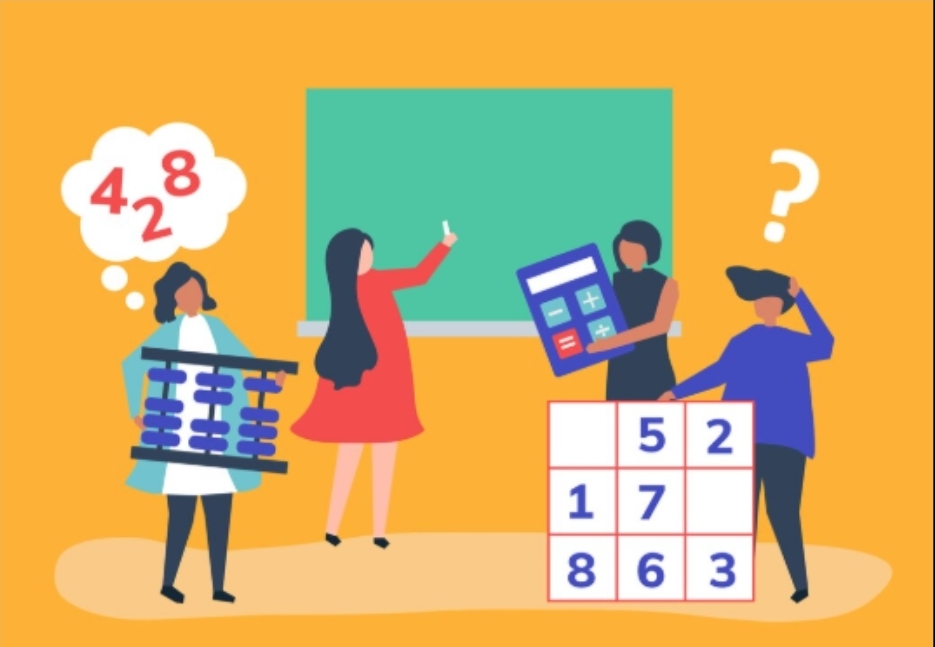
Give your child a brief sequence and ask them to find the next numbers. Start with uncomplicated. Arithmetic progressions then introduce alternating or nested rules. These exercises build numerical intuition and are an ideal warm-up before trying formal logical puzzles. Use Online classes for math brain teasers to identify the difficulty and maintain engagement, and revisit patterns weekly to track progress and improvement.
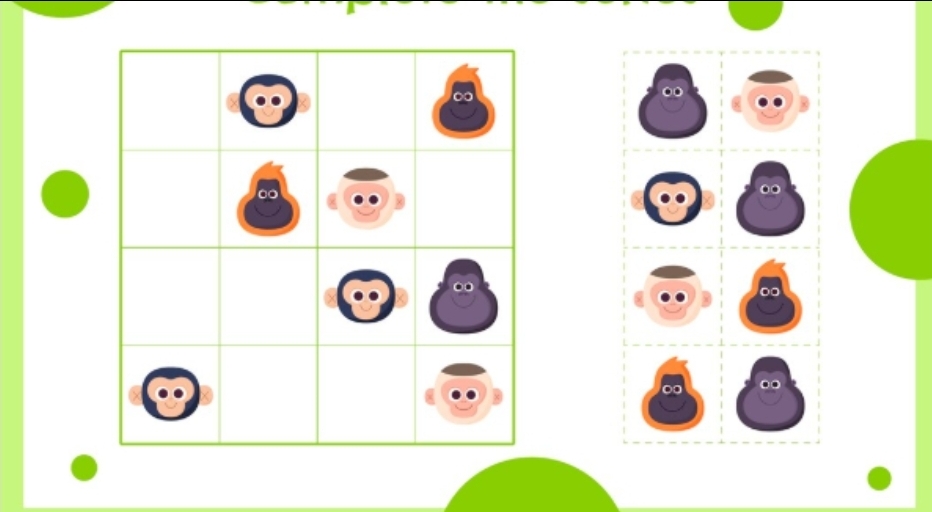
Provide a small grid with clues and let your child deduce where items belong. Visual logic tasks strengthen spatial reasoning and deduction. When you combine grids with time-bound rounds, children learn to prioritise evidence and refine hypothesis-testing skills that translate directly to classroom problem solving and exam technique. Try mixing in maths puzzles with answers so children can self-check and reflect on strategy.
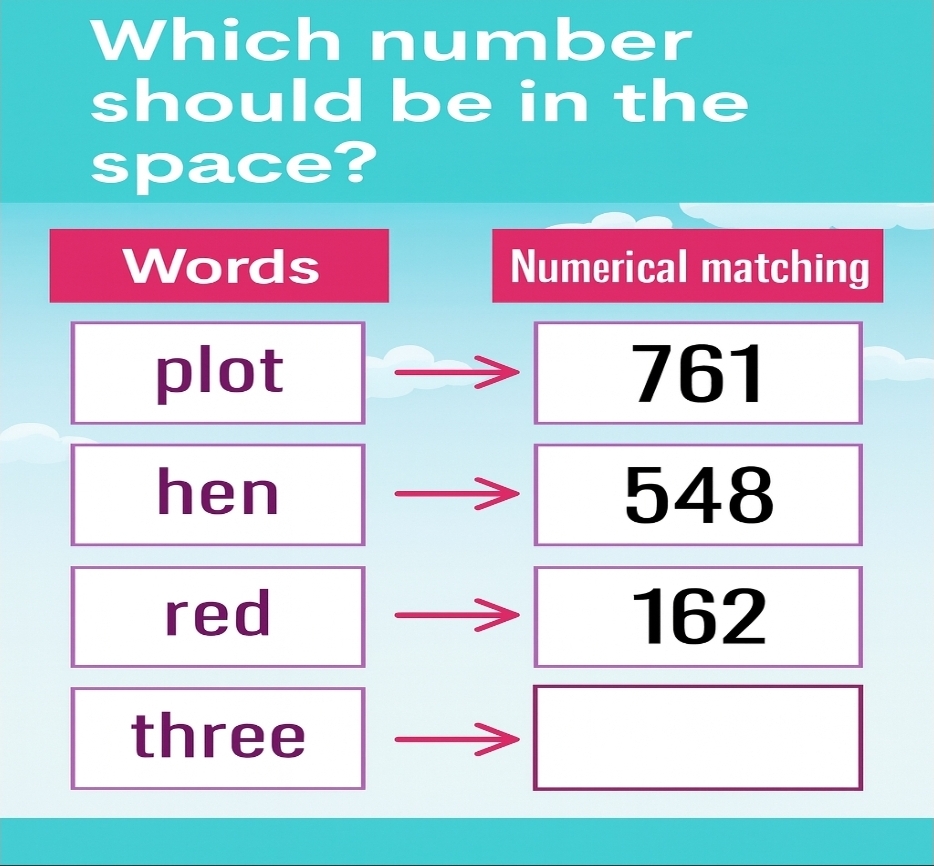
Riddles that mix language and numbers encourage translation between story problems and equations. Present a brief narrative, ask the child to model it with a simple equation, then solve it together. This process enhances comprehension and helps students understand that mathematics applies to everyday situations. After every lesson, give students a few math questions and answers so they can contrast approaches and results.
Create a ladder of statements where each rung depends on the previous one; children decide which statements must be true. This trains conditional reasoning and the ability to follow multi-step arguments—key for higher-level maths. To build independence, supply maths and logic puzzles with graded hints so learners practise both inference and checking their own work.
Here is a step-by-step procedure by which you can encourage your child to be an effective logical thinker in their real-life situations:
With the multi-layered problems logic puzzles present and the mental engagement required to solve them, these exercises become an excellent tool to stretch your child’s reasoning and analytical skills to the next level. Your child will be able to see the patterns, hypotheses, and resolutions that the most successful real-world problem solvers and analytical entrepreneurs encounter.
Math puzzles and brain teasers instil children’s self-sufficiency and problem-solving skills, as well as the most fundamental academic skills of breaking large-scale problems into manageable parts of the academic curriculum. Since the time spent solving them is similar to the time spent playing, math puzzles counter children’s fear of numbers and improve self-esteem. Memory, attention, and concentration are some of the cognitive abilities that puzzles improve. Additionally, clear and rational reasoning as well as the framework of the appropriate methodology become evident as children are working with math and logic puzzles, and these skills are particularly useful in school, especially with algebra, geometry and word problems.
Finally, puzzles make learning enjoyable and ideas memorable. Children stay motivated when they see progress, understand explanations, and experiment with new ideas. This makes mathematics questions and answers more approachable and turns daily learning into an exciting activity.
In short, math puzzles not only build strong logic but also create lifelong learners who enjoy thinking.
For tailored guidance and structured practice using these activities, visit Jainam Online Classes. We design short, curriculum-aligned sessions that combine puzzle-based learning with clear step-by-step instruction.
Image Credit: Freepik.com