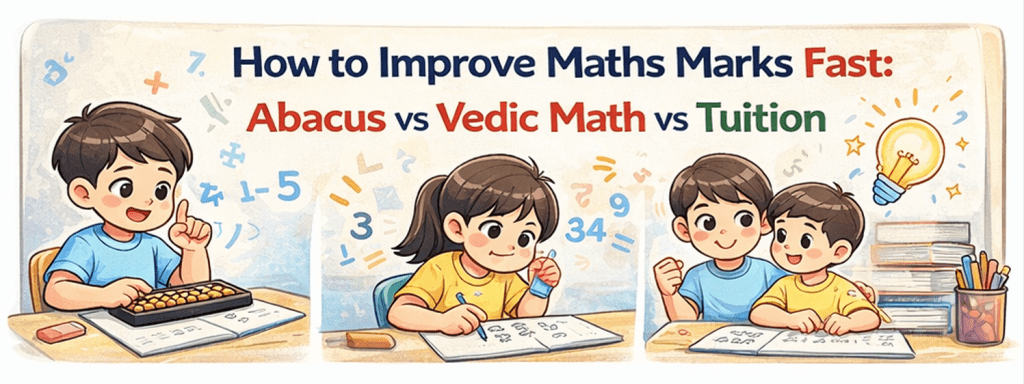
Many times, parents notice their child is performing well in all subjects except maths. Simple calculations take longer, mistakes happen during tests, and gradually the child begins to lose confidence in the subject. The problem is not your child’s ability; it’s in the way they are being guided. Not everyone is the same, but to solve this problem, smart parents often explore different learning methods like abacus classes, Vedic Maths, or regular tuition.
Each approach helps children become better at maths, but the real question parents have is – how to improve it faster? However, to choose either of the approaches, parents must understand their child’s struggle.
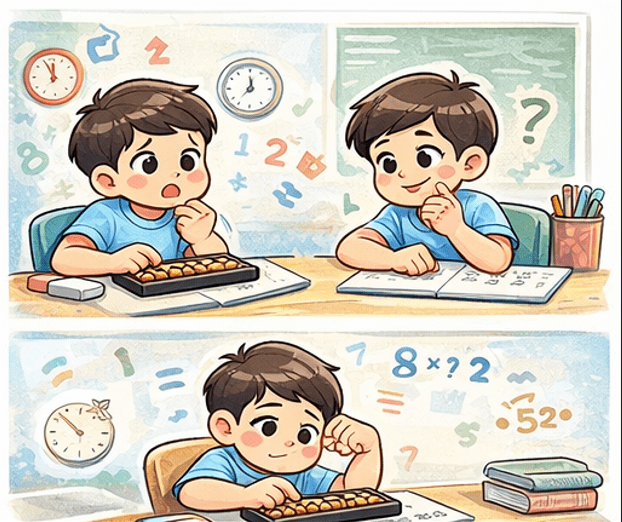
There are several reasons why children find it difficult to score well in maths exams.
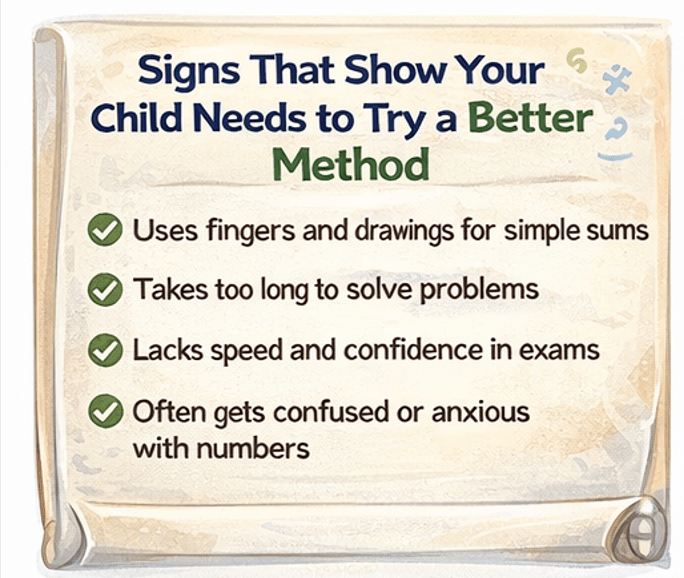
· Initially, children are taught to rely on finger counting or take extra time to solve simple sums. Doing this slows them down during the exam and may prevent them from finishing the paper on time.
· When they often make mistakes, they become unsure about numbers, they hesitate while solving problems, and often make avoidable mistakes.
· Parents usually compare them with classmates, which creates fear of maths, making the subject feel difficult even when the concepts are simple.
· Finger and line drawing methos reduces the child’s mental calculation ability, which causes anxiety and becomes one of the major reasons children struggle with maths.
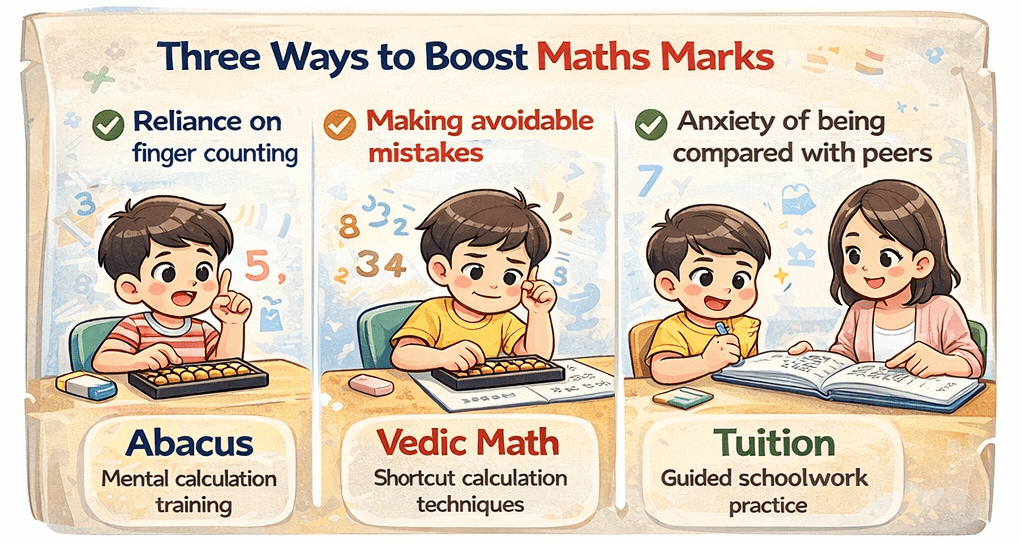
Improving maths marks does not always require studying for long hours. What children need most is better number understanding, faster calculation ability, and confidence while solving problems. Here are a few ways that can help improve maths performance:
When children can calculate quickly in their minds, they spend less time on basic sums and more time understanding the problems.
Short daily practice session helps children become more comfortable with numbers and reduce exam pressure.
Better concentration helps children avoid careless mistakes during exams.
Programs like abacus training or calculation techniques can strengthen the brain’s ability to process numbers faster.
There are three common options parents usually think of when they want to improve their kids.
| Feature | Abacus | Vedic Maths | Tuition |
| Focus | Mental maths and brain development | Shortcut calculation techniques | Schools syllabus practice |
| Age group | 4 – 14 years | Usually, 10+ years | Any age |
| Calculation speed | Very fast mental calculation | Faster for specific problems | Depends on practice |
| Helps in school maths | Yes, improves speed and accuracy | Helps certain calculations | Helps in understanding concepts |
| Improves concentration | Strong improvement | Limited | Not specifically |
| Learning style | Visual and brain training based | Formula and trick based | Concept explanation |
An abacus focuses on developing mental calculation ability and concentration from an early age.
Vedic maths mainly teaches shortcut techniques that help solve certain types of calculations quickly.
Tuition classes focus more on completing the school syllabus and helping children understand concepts.
Each method has its role, but their impact on a child’s maths learning can be different depending on the child’s age and learning needs.
Improving a child’s maths marks is not about studying longer hours; it is about building speed, confidence, and a stronger understanding of numbers. While tuition helps children with the school syllabus and vedic maths teachers certain calculations shortcuts, abacus training focuses on developing mental maths ability and concentration from an early age.
When children learn to calculate faster and think clearly with numbers, they become more confident during exams and are able to solve problems more accurately. If you are looking for a structures way to strengthen your child’s math foundation, Jainam classes offer online abacus programs designed to improve mental maths, focus, and over all confidence in mathematics. With guided learning and regular practice, children can gradually develop the skills that help them perform better not only in maths but in overall academics.
FAQ
At what age should a child do math?
Children can start learning basic maths like counting and number recognition around 3–4-year-old. Structured programs, like an abacus is usually suitable for children from 4 to 6 years.
What is the best math program for ADHD children?
Interactive and visual learning programs work best from ADHD children. Methods like abacus training help improve focus, engagement, and mental calculation skills.
What math does a 7-year-old know?
A 7-year-old should know basic addition and subtraction, counting up to 100, simple word problems, place value, and early multiplication concepts.
Which math class is best for kids?
The best maths class is one that builds strong number understanding, mental calculation, and confidence, along with regular practice and concept clarity.
What are the 4 types of math?
The four main types of maths are Arithmetic, Algebra, Geometry and statistics.