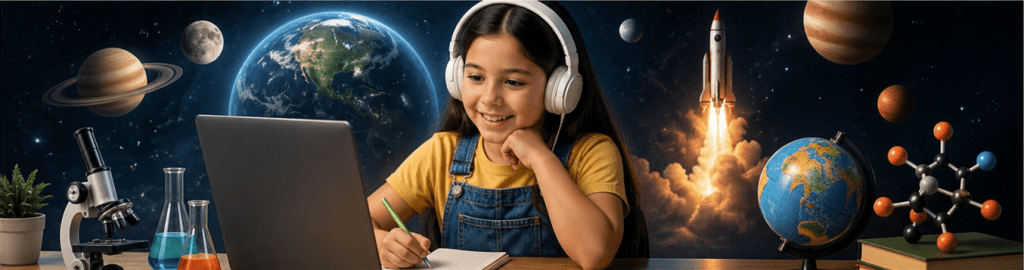
Have you noticed your child showing interest in the slow-motion video of a chemical reaction? You are not alone. Science has a way of doing that. The problem is, not every school science class makes space for that kind of spark. The curriculum moves fast, experiments get skipped, and kids who are curious walk away thinking science is just memorizing the periodic table.
That’s exactly why smart parents are choosing online science classes for kids. But before you enroll, you probably have one very fair question: what do they actually teach?
Here is what kids science curriculum online is all about.
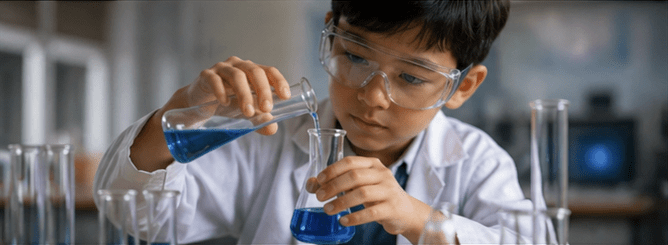
Let’s be honest. A 45-minute school science period split between attendance, notes, and homework reminders doesn’t leave a lot of time for good stuff.
Online STEM curriculum for kids is built differently. Here’s what makes it work:
· Smaller group sizes mean more hands-on time per child
· Sessions move at your child’s pace, not the average class pace
· Experiments are actually done, not just described in a textbook
· Kids build a genuine “I can figure this out” mindset
· Learning connects to real-world questions kids already have
Want your child to develop these skills? Join our live science program at Jainam Online classes.
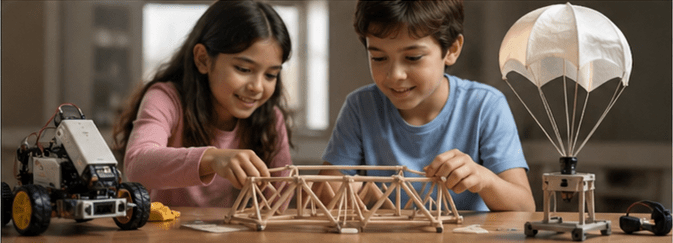
Across all grade levels, a good virtual science program hits five major subject areas. Each one is revisited and expanded as kids get older.
This covers everything living — from the smallest cells to entire ecosystems. Kids learn about:
· Plant and animal life cycles
· Habitats and food webs
· The human body and how its systems work together
· Basic genetics and heredity (upper grades)
Kids have big questions about the planet and the universe. Earth science helps answer them:
· Weather patterns and climate systems
· Rocks, minerals, and the layers of the Earth
· The water cycle and natural resources
· The solar system, moon phases, and space exploration
This is where physics and chemistry come in, made accessible for every age:
· Properties of matter (solid, liquid, gas) and how it changes
· Force, motion, gravity, and simple machines
· Light, sound, and energy
· Basic chemical reactions (think baking soda volcanoes, then actual lab chemistry)
Most online STEM curriculum for kids weaves in engineering challenges throughout the year. Kids aren’t just learning science — they’re applying it:
· Build a bridge that holds weight
· Design a water filter using household materials
· Engineer a parachute and test its drop speed
These activities develop persistence, creativity, and the ability to think through failure — skills that matter far beyond science class.
This is the thread that runs through everything. From the very first grade, kids learn:
· How to ask a clear question
· How to form a hypothesis
· How to run an experiment and record observations
· How to analyze what happened and why
By the time they reach middle school, this process becomes second nature. That’s exactly what makes strong science learners stand out.
Most kids under 12 do better with live online science classes. The interaction keeps them engaged and the teacher catches confusion early. Older, more independent learners sometimes prefer the flexibility of self-paced options.
At Jainam Online Classes, our live science sessions are designed to give kids the real-time connection they need while keeping things hands-on and genuinely fun.
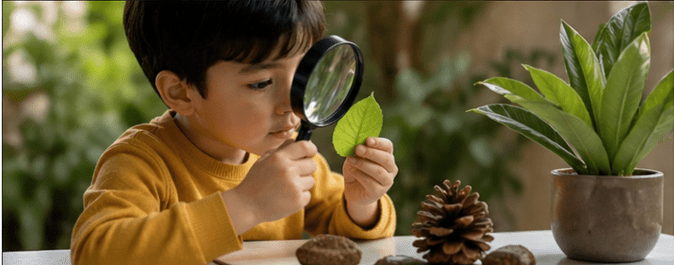
Not all online science programs are built the same. Here’s what separates the good ones from the ones that just have your child watching videos for 40 minutes:
· Kids use household materials to do science, not just watch it
· Concepts are explained in ways that actually click for each grade level
· Good programs follow NGSS or equivalent standards so learning transfers back to school
· Parents and kids can see what’s been mastered and what still needs work
· Not just enthusiastic, but trained to teach science to children
If you’re looking at an online science program and it can’t explain how it covers each of these, that’s worth knowing before you sign up.
One thing parents worry about: will online science classes actually help with school science, or will they just confuse my child with different content?
The short answer is that a well-designed kids’ science curriculum online reinforces exactly what school teaches, it just goes deeper and makes it stick. Here’s what that looks like in practice:
· A Grade 3 student learning about the water cycle in school comes to their online class having already done a condensation experiment at home. They’re the ones answering questions.
· A Grade 5 student studying ecosystems does a virtual lab on food chains that’s more interactive than anything their textbook offers.
· A Grade 7 student who’s been doing online chemistry for a year walks into their school lab already understanding why reactions happen, not just that they do.
The confidence that builds from knowing the material deeply? That follows them into every class, every test, and every future science course they take.
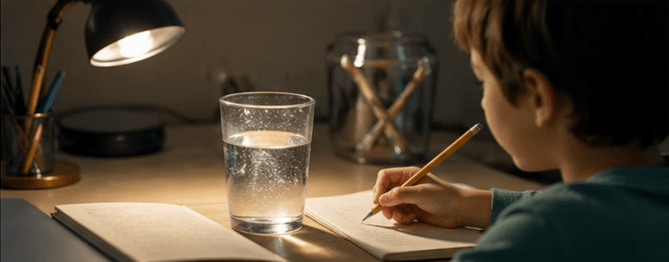
Here’s the thing about science: kids don’t need to be “naturally good at it.” They just need the right environment to discover they love it.
A good online science curriculum for kids gives them more than facts. It gives them a way of thinking. Ask a question. Test it. Figure out why. Try again. That process, repeated across years, turns curious kids into confident problem-solvers.
Whether your child is in kindergarten, asking why the sky is blue, or in seventh grade wondering how vaccines actually work, there’s a structured, engaging curriculum that meets them exactly where they are.
Most programs start from age 5 or kindergarten. Early science learning focuses on observation and curiosity rather than formal concepts.
Q2: Do kids need special equipment or materials for virtual science lessons?
For the most part, no. Good online science programs are designed around materials families already have at home.
Q3: How is online science different from just watching science videos on YouTube?
Science videos are great for sparking interest. But watching is passive, your child observes but doesn’t do. Online science classes involve live instruction, hands-on experiments your child actually runs, questions they ask in real time, and progress that’s tracked over weeks and months. It’s the difference between watching someone swim and actually getting in the water.
Yes, especially if the online curriculum aligns with school standards like NGSS. Kids who have worked through a concept hands-on, formed a hypothesis, and seen results retain information far better than kids who only read about it.
Q5: What’s the difference between an online science class and a homeschool science program?Online science classes are typically structured sessions with a live teacher, a defined curriculum, and a class of peers. Homeschool science programs are usually self-directed, with parents guiding the learning using a curriculum they’ve chosen.