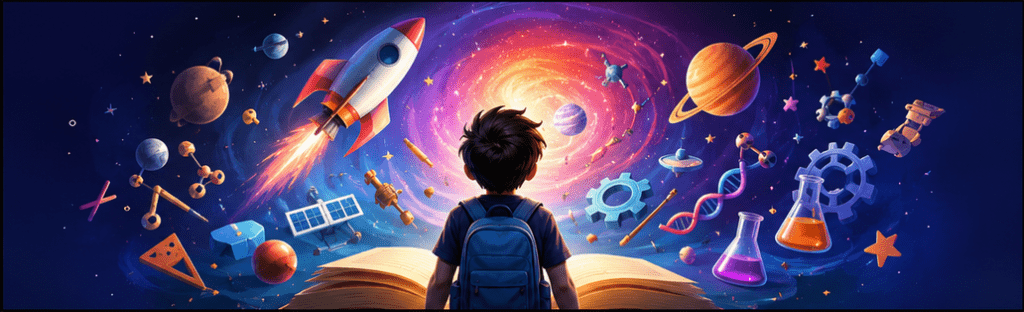
You’ve probably heard the term STEM popping up a lot lately, in school newsletters, parenting blogs, and educational YouTube videos. STEM is for Science, Technology, Engineering, and Mathematics. It’s not just a school subject; it’s a way of thinking, creating, and problem-solving that prepares kids for a world that’s changing faster than ever.
Here’s the truth: the jobs your child will walk into 15 years from now don’t fully exist yet. And that’s exactly why the importance of STEM education has never been greater. It doesn’t just teach your child what to learn; it teaches them how to learn, adapt, and innovate.
Here are the 7 real, research-backed benefits of STEM education for kids.
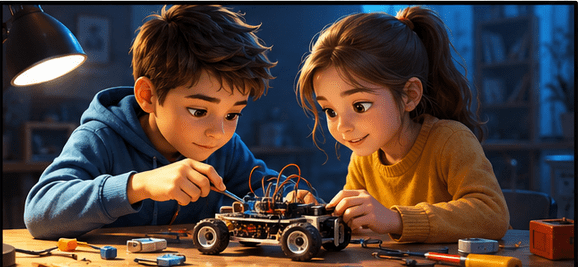
Traditional education often teaches subjects in isolation. STEM flips the model. It blends disciplines together the way the real world does, because solving an actual problem rarely requires just one skill.
Building a mobile app requires a combination of logic (math), creativity (arts), technical knowledge (technology), and structured thinking (engineering). STEM education teaches children to work across all of these areas and to enjoy it.
| STEM subjects | Skill it builds | Real world use |
| Science | Curiosity & inquiry | Medical research, environment |
| Technology | Digital Literacy | Coding, AI, app development |
| Engineering | Problem solving | Bridge, robot, machines |
| Mathematics | Logic &reasoning | Finance, data, architecture |
Now let’s get into why these matters so much for your child’s development.
Ask any employer what skill they look for most in new hires, and critical thinking almost always tops the list. Yet most traditional schooling trains children to memorize answers, not to question problems.
STEM-based learning puts kids in situations where there’s no single correct answer. An engineering design might not hold weight and fixing it is the point. Children learn to:

Life is full of problems, big ones, small ones, and everything in between. STEM education created a safe space for children to practice solving problems regularly, which means by the time real challenges show up, they’re already prepared.
In a STEM program, children might be asked to:
Each of these tasks has a problem at its core. Children have to define the problem, brainstorm solutions, prototype, test, and revise. That process done over and over is how you improve problem solving skills in kids in a way that actually sticks.
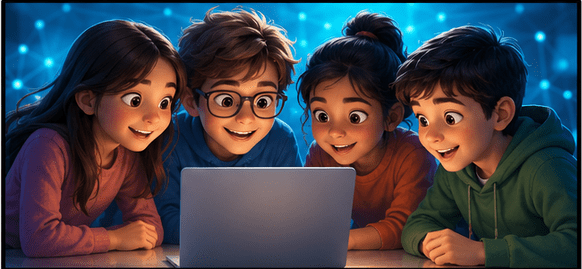
When children are asked to design a structure, they need creativity. When they code an animation, they’re blending technical skill with artistic expression.
Creative learning for kids through STEM helps them:
Studies show that children exposed to science, engineering, tech and maths, learning retain information better and show higher engagement. Creativity is not a soft skill; it’s the engine behind every breakthrough.
Very few careers are solo endeavors. Whether your child grows up to be a software developer, a surgeon, or a product designer, they’ll work with teams. STEM education is built around collaborative projects.
Children working in STEM environments regularly:
These are not just social niceties; they’re professional skills that take years to develop. Starting early gives children a massive head start.
Also read : Effective brain development activities for kids at home.
Many children (and adults) associate math with stress, failure, and confusion. STEM-based learning tackles this head-on by making math contextual and meaningful.
When a child measures an angle to design a ramp, calculates how much material they need for a structure, or tracks data from a science experiment, math stops being abstract; it becomes a tool.
This is one of the quieter but most powerful benefits of STEM education for kids: children who learn math through real world application are more confident, more accurate, and are less likely to develop long term fear of numbers.

By 2030, it’s estimated that millions of new jobs will be in technology-related fields, many of which don’t exist yet. Children who grow up comfortable with technology, data, and digital tools will have a clear advantage.
But it’s not just about coding. STEM prepared kids to:
The reason STEM is important for children argument becomes crystal clear when you look at where the world is headed. AI, robotics, data science, and biotechnology are all of these fields that are looking for people who can think in STEM ways.
Perhaps the most underrated benefit of STEM education is what it does to how a child sees themselves.
When a child designs something that works even after three failed attempts, they learn a lesson no textbook can teach: I can figure things out.
STEAM education rewards effort and process, not just correct answers. This builds a growth mindset, the belief that abilities can be developed through dedication and hard work. Kids who grow up with this mindset:
Confidence built through STEM isn’t fragile; it’s earned through doing.
Limited seats available, don’t wait. Enroll your child in a program that builds these skills from the ground up.
The world your child will graduate into is going to be faster, more connected, and more complex than anything we’ve seen before. The question isn’t whether they’ll need STEAM skills; they surely will. The question is when you start building them.
The importance of STEM education isn’t about producing scientists or engineers, it’s about raising those who have clear thinking ability and are creative. Every experiment that doesn’t work teaches patience. Every creative block pushes your kid to think. So, enrol your child at Jainam STEAM classes. It’s not just education, it’s a gift.
No, there is no minimum age, its benefits as early as you start.
STEM doesn’t replace traditional education.
Yes, STEM programs have become very effective, it covers multiple subjects all at once.
Yes, online STEM programs have become very effective, especially those built around interactive projects and live instruction.
STEM stands for Science, Technology, Engineering, and Maths, whereas STEAM stands for Science, Technology, Engineering, Arts, and Maths. Including the arts makes learning more engaging and effective.