As the summer vacation starts, every parent across the globe feels stress. The challenge is how to keep the child engaged throughout the day without missing their studies. Are you also worried about this? Are you looking for meaningful summer activities for kids?
Many parents prefer virtual summer camp, which allows children to explore the subject of their interest, like coding, abacus, chess, science, or tech, in the comfort of their home. A structured online learning prevents the summer slide and also allows flexibility to travel anywhere. Before you enrol your child in any summer camp, you must know its distinct advantages.

Here are some of the advantages of online summer camps for kids over traditional camps:
You must also read: Why do parents in the USA prefer online summer camps for kids?
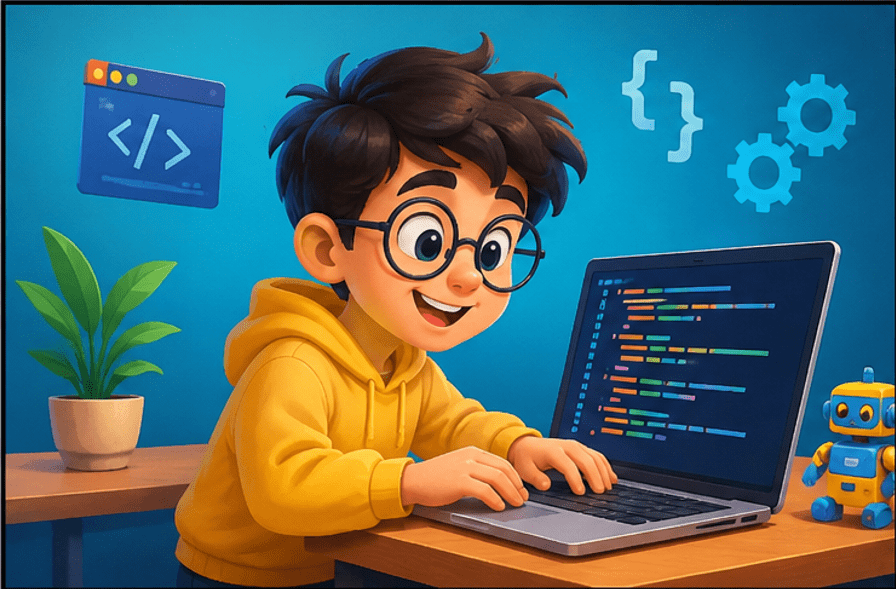
Many American parents worry about screen time during the summer break. However, i t is important to distinguish between passive and active engagement. Passive screen time is all about scrolling social media or watching endless cartoons with almost no value.
Whereas an online summer camp for kids uses “active” screen time to teach them something meaningful. When a child is solving problems in a live coding session, practicing mental math, or collaborating on a science project, they are using their brain, exercising logic, and remaining accountable to an instructor.
This is not like time on a table, but is an interactive educational experience that keeps them mentally shaped and ready for the academic challenges of the upcoming school year.
These summer activities for kids benefit: sharper memory, focus, and emotional balance.

Once you are sure about enrolling your child in an online summer camp. Here are the top programs that parents across the USA are choosing this year.
Abacys improves concentration span, increases calculation speed, and boosts memory retention. It trains both sides of the brain, making complex arithmetic feel like second nature.
Coding is quickly becoming a core literacy. It builds problem-solving instincts and provides a sense of accomplishment through building projects. Kids get to create their own games or websites, which feels much more like play than schoolwork.
Building a strong foundation for reading and talking fluently can boost confidence, so it’s the best low-pressure summer activity for kids. For shy children, interactive online sessions provide a safe, encouraging space to express themselves without the pressure of grades.
Chess teaches children how to plan, be patient, and handle both winning and losing graciously. It helps in critical thinking and strategy. It is a stimulating alternative to passive gaming that builds long-term life skills.
STEM is where curiosity meets creation. Science, Tech, Engineering, and Mathematics together in one program develops computational thinking and creates a “real world” context for school subjects.
Check out the best summer activities for kids.

Finding the right online summer camp for kids is one of the best investments you can make in your child’s future. It isn’t just about filling the hours during the long vacation. It is about providing a structured, fun, and brain-building environment that helps them grow.
Whether you are staying home for the summer or travelling across the country, high-quality virtual programs ensure your child stays sharp, confident, and ready for the year ahead. A great program turns the summer break into a season of discovery, skill-building, and lasting memories. Enrol your child in Jainam summer activities for kids.
What parents are saying:
“Last year, we were so much worried about the screen time, but we enrolled Reah in the abacus program, and we saw a total shift. She isn’t just busy; she is genuinely excited to show me the problems he solved. This year, I am planning to enrol him in a STEM program. Jainam”
The ideal age is 5 to 14, because after that, the academic pressure is higher, and school subjects require more attention.
No, that’s the benefit of online summer programs for kids.
Yes, live interactive online classes provide personalized attention through small groups or one-on-one instruction.
Online learning involves “activities” screen time, which is fundamentally different from passive scrolling or watching videos.
Look for programs that offer live interactive instruction rather than pre-recorded videos. Reviews and testimony are good, offer a demo or trial, and classes.