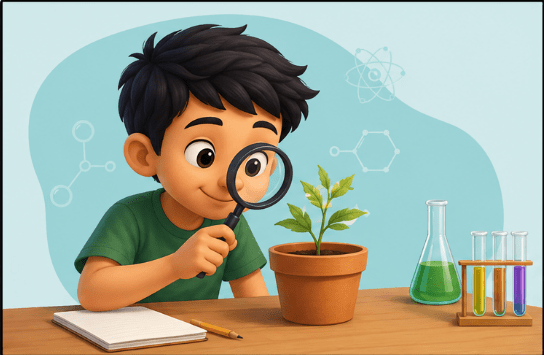
If you’ve ever watched your child obsessively stack building blocks only to watch them fall, or ask “Why?” for the tenth time in one hour, you’ve already seen STEM education for kids in action. It isn’t a buzzword found in school brochures; it is a way of seeing the world.
As parents in the USA, you might often feel the pressure to prepare your children. But the best preparation isn’t about rote memorization or filling their schedules with chores. It’s about fueling the natural spark of innovation that kids already possess. You can do all this through STEM education. Here are some of the benefits and best learning activities
7 Benefits of STEM education
The future of the next generation is unpredictable, but the need for problem-solvers remains constant. For ages, we have taught kids to find the correct answer, but now is the time to teach them the approach, test their ability themselves, and build resilience.
STEM teaches kids not only to reach the right answer but also to analyze and evaluate solutions. This exercise is best for their brain.
STEM stands for science, tech, engineering, and maths, which children when study apply on practical activities like measuring ingredients for a recipe or calculating the height of the tower and they build their real-world confidence.
When a project fails, a child learns that “failure” is just data. They learn to test, pivot, and try again, which is a vital life skill.
By working directly with an instructor, your child learns to clearly explain their logic and thoughts. This encourages them to articulate their ideas, ask deep questions, and gain the confidence to express complex thoughts.
The best scientists are also artists. STEM encourages kids to approach technical problems with creative flair, thinking outside the box, when standard solutions don’t apply.
Childrenw who get to know and see things with reason and critical thinking understand how technology works. STEM education help them grow from passive consumers of digital content into active, capable creators.
STEM creates a safe space to fail. Kids who learn this way grow up believing they can solve any problem through effort and persistence.
You don’t need a high-tech lab to start with your child’s STEM activity. You can start with your living room with the following fun STEM activities:
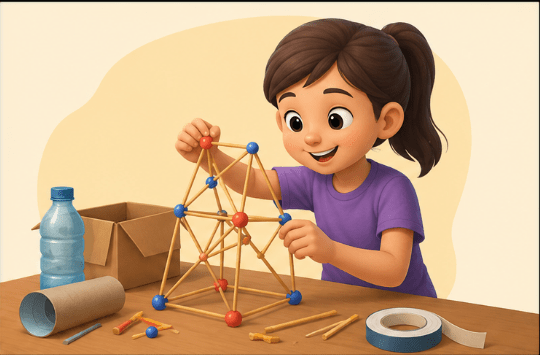
Give your child a bag of scraps, cardboard, tape, paperclips, and bottles. Aks them to build a structure that holds specific weight, make this activity as a challenge they will actively do it.
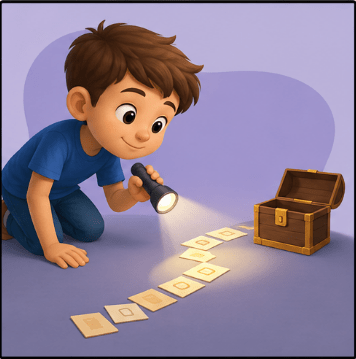
Create a series of riddles where each answer leads to a location. Use logic puzzles or basic binary code (0s and 1s) to write the clues. It introduces them to the basics of coding and sequential thinking.
If your child loves computers, have them use a simple, free drag- and-drop animation tool to tell a story about their day. It blends technical skills with the artistic expression needed for true innovation.
The world your child will graduate into is going to be faster, more connected, and more complex than ever before. The importance of STEM education isn’t about producing a generation of software engineers or physicists by age ten; it’s about raising thinkers who are capable of navigating that complexity with confidence. While DIY projects are a fantastic way to spark initial interest, there eventually comes a point where the child’s curiosity outpaces the kitchen table. This is where structured STEM programs for children become a game-changer.
Ready to see how professional guidance can bridge the gap between curiosity and capability? Explore Jainam STEM classes today. Let’s make the future something your child feels excited to build.

No, while STEM builds a foundation in technical subjects, its primary girl to cultivate a growth mindset.
One-on-one classes offer a personalized learning experience that a group setting simply can not match.