Published on October 16, 2025 | By Jainam Online Classes
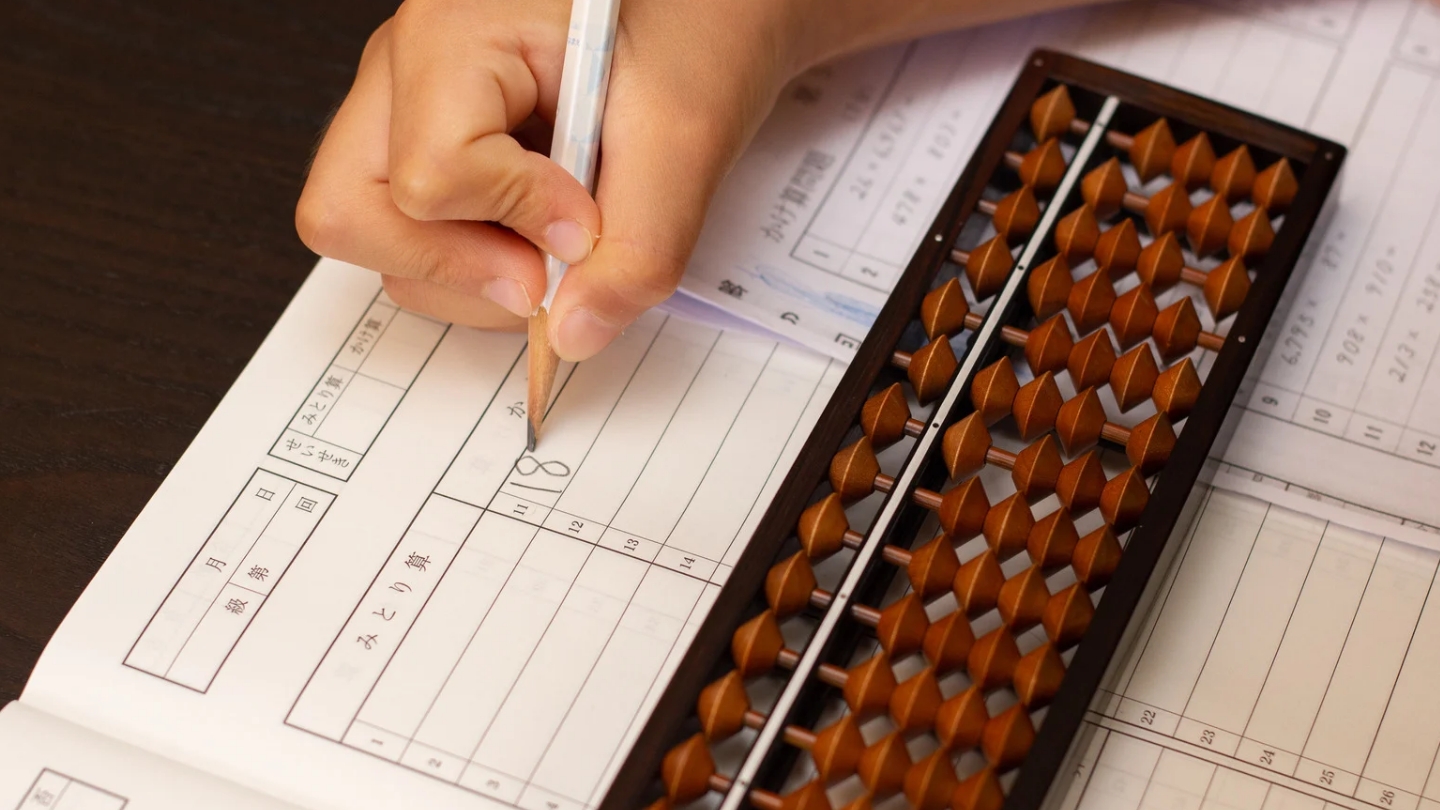
Long before the age of smartphones and the internet, we had tools and objects that were used in place of those. Maybe not all youngsters will remember what a physical letter looks like or how pigeons were used as messengers. But that doesn’t mean they didn’t have their charm. As ancient as they are, their use defined the future. In that same way, before calculators, we had a thing called an Abacus. So in this article, we will learn a few historical significances of this tool, and how is an abacus used.
Now math consists massively of numbers and elements like letters. But did you know that these numbers were invented far in the future, and counting existed way in the past? 20,000 years ago, to be exact, where in central Africa, Ishango bones were discovered which had notches for counting. But by 3000BC, merchants from around the world had already been familiarised with a manner of counting with beads sliding across a thin line. It was called calculi, which roughly translates to Calculate. That is our old calculator with beads, which later became renowned as an Abacus.
As unique and groundbreaking as it may be, there is no historical proof that it was invented in a single place or by a single person. As it stands, suddenly merchants from all over the world simultaneously invented this tool, and it was known that they had only done so after their trade reached to the West, where most things are recorded. That’s why we see various kinds of abacuses out there. Some have seven beads, some have five, and some even have 10 or beyond. That symbolizes the diversity of the abacus, and how is an abacus used.
But wait, wasn’t there a turning point somewhere in history? Well, yes, and it again goes back to our classical Roman Empire. They had a thing called Hand Abaci, which was inspired by the Salamis Tablet from Greece. Technically, both are the same thing; it’s just that the hand abaci is more portable. And since the Roman Empire was a trade hub at the time, the idea quickly circulated. That may have been the biggest turning point, but not the only one.
The old calculator with beads soon became a thing of the past, as people learned the way to make a mental image of an abacus and use it to calculate. This was not just quick, but also efficient since now you no longer needed to use your hands to hold and move the beads physically. Heck, people even stopped looking at the person speaking; the ear is all they needed to hear the number, and the rest was handled by the brain. Credit for this turning point goes to Japan, which truly glorified mental math to its finest. India also had some big hand in it, and so did Vietnam. These trade-heavy places were the first to take full advantage of the old calculator with beads, until the calculators arrived.
In a sense, it looks like calculators killed the abacus and depopularized it. But in reality, it didn’t. Let’s stop for a bit and understand for whom the calculators were made. It was made for the commercial sectors like banks and corporations. Because adding a massive list of numbers and getting instant results was important. Like, come on, no one would like to wait for hours at a bank counter, right? Slowly this trend spreaded across all sectors like education and even home accounting.
Fundamentally, calculators just gave an easier way of calculating that didn’t require the time and efforts needed, like how is an abacus used. You can’t do math like crazy from day 1 with that old calculator with beads, but with the modern one, you can.
Overall, the abacus is very much alive, and a lot of countries like Japan have mandatory curricula in schools for the soroban or suanpan methods. We all know that an abacus is more than a tool; it is an experience that comes with important skills like critical thinking, concentration, memory, etc, which digital calculators just can’t provide.
Well, by now it should be clear why the old calculator with beads has such significance. With that out of the picture, now let’s see how abacus works in the most simplest form. Remember that if you want to learn this in more detail, click on the read more link above. Anyways, here’s how it works:
Congrats, you just learned how to do basic math with your very own old calculator with beads. Was it difficult? Well, not for now. But as you learn other forms of calculations like addition, multiplication, division, and so on, it will become a bit more challenging. Still, the reward is worth the struggle, and learning how is an abacus used.
At this point, it is painfully clear that Abacus does more good than harm. It stimulates the brain so much that it is forced to evolve and turn its host into a superhuman being who can do it all, without breaking a sweat. But that’s only one of the few effects in its arsenal, and the rest looks like this:
The abacus has much more to offer than these seven bullet points. If you want to learn more, then buy your abacus now and find out. After all, treasure hunting is the real fun around this tool, and the good part is only getting started.
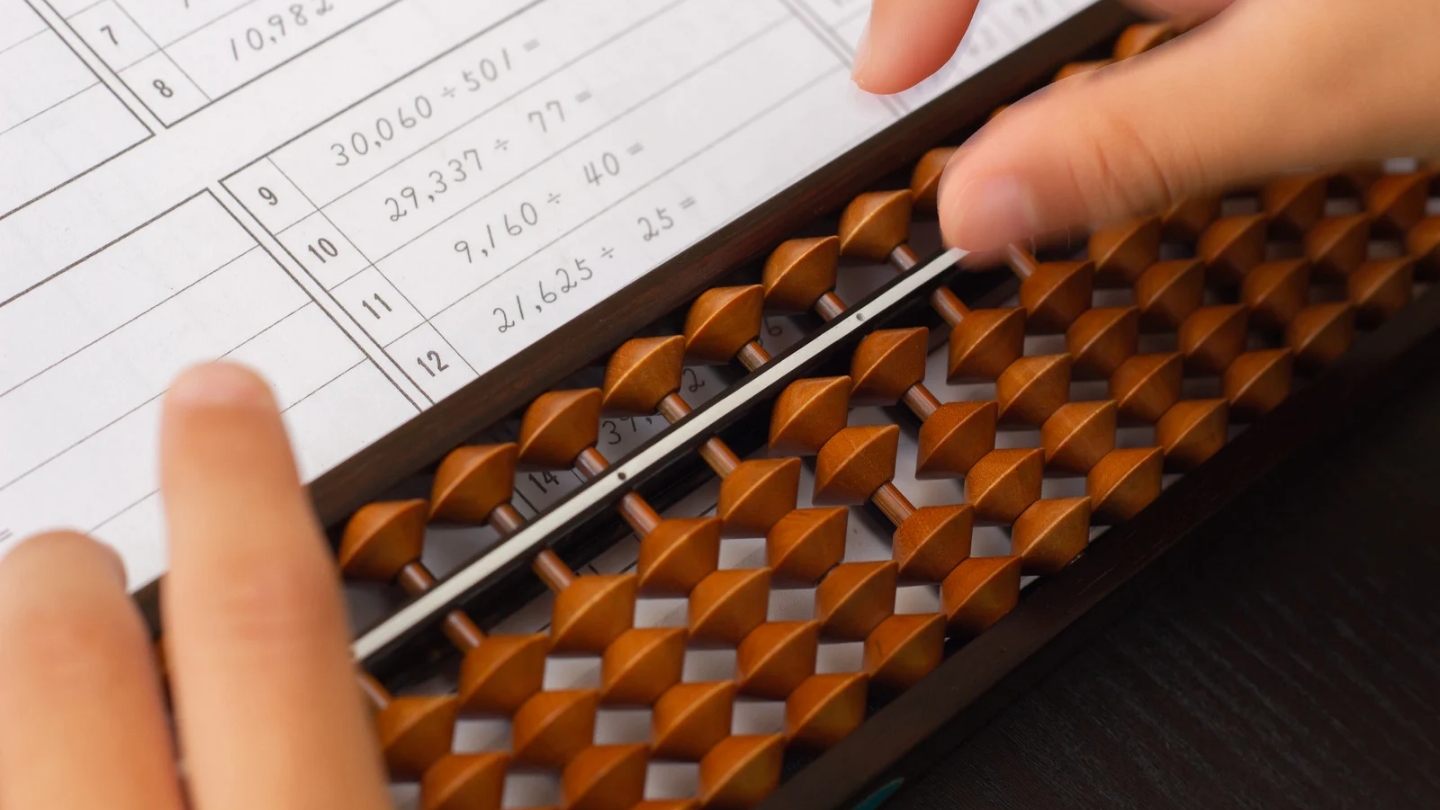
Learning how abacus works is a moderately challenging tool that comes with a lot of additional benefits that no other tool can ever hope to provide. It has a rich past that also gives it historical significance, which makes it even more attractive. Overall, a tool is still just a tool, and if you don’t need it, there is no point learning it. But, if you want to learn something new and take your career prospects to new heights, don’t think twice and give Jainam Online Coaching a call.