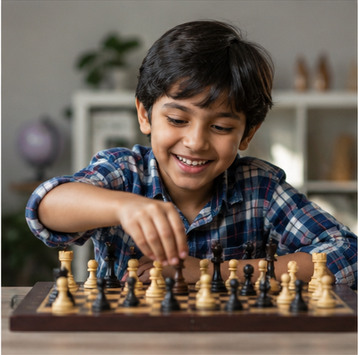
As a parent, you must have noticed the change in behaviour of your child while they are watching anything online and the moment they open a school book. If yes, then you are dealing with a modern attention crisis.
In 2026, due to so much digital exposure, children have shorter attention spans and low tolerance for deep thinking. And to deal with modern issues, you need to take them back to the ancient mind training techniques, i.e., chess. Chess acts as a weight-lifting gym for a child’s mental processing power.
If you are planning to enroll your child in chess classes, here are some of its benefits you must know.
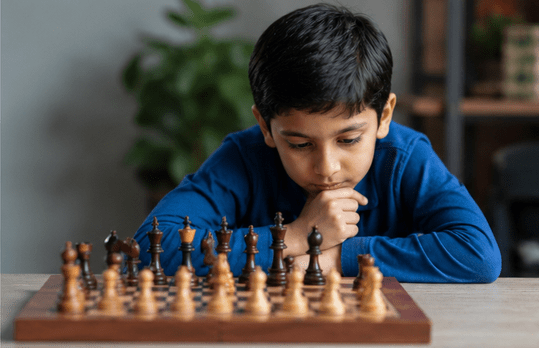
Enrolling your child in structured chess classes does much more than teaching them how to slide wooden pieces across a board. To understand it better, here are 5 ways chess supercharges your child’s cognitive development.
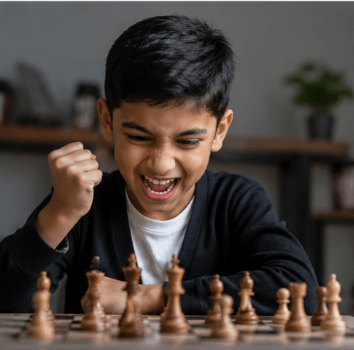
With the changing environment forcing your child to get away from the screen and play the old chessboard, it might be very tough. So, instead of forcing them to play traditional chess, turn their screen time into effective online chess classes for kids. Digital platforms are now interesting as they use interactive puzzles, color-coded threat zones, and automated game analysis that traditional boards can not match. So, this gamified approach holds a young child’s interest much longer, and if you want your child to get into this quickly, book a demo class with Jainam Classes and make their entry into the highly competitive and deeply rewarding world.
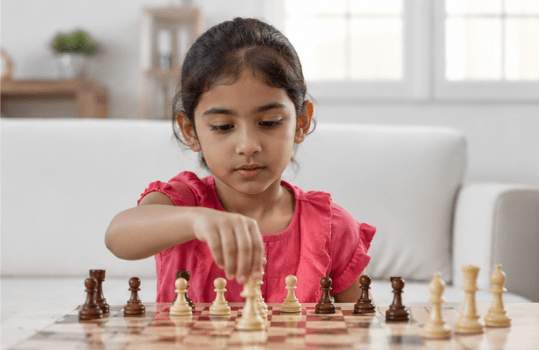
1. What is the best age to introduce a child to chess?
The age between 6 and 8 is an ideal age to introduce chess to your child. By this age, they easily grasp the basic directional movements of pieces and focus for at least 15 minutes in the game and gradually increase.
2. Can learning chess help improve my child’s school grades?
Chess does not promise any academic subject learning; it is a mental development technique, which eventually will have a positive impact on the child’s academics. Chess trains your child to analyse, predict, plan, move, and accept everything practically.
3. My child is highly energetic and can not sit still. Will they enjoy chess classes?
Yes, hyperactive children often love chess because the board provides them a constant stream of complex visual puzzles that keep their brain occupied and channel their energy into focusing and doing logical calculations.
4. How long does it take to see a noticeable behavior shift in focus?
With a consistent routine of playing 2 to 3 times a week, most parents report a visible shift in their child’s patience, homework concentration, and decision-making habits within 3 to 4 months.
5. How can I test if my child has a natural interest in the game?
The simplest way is to let them experience a professional session. You can book a free demo at Jainam Classes, where our certified chess instructors introduce beginners to the board through fun storytelling, evaluating their natural style without any upfront pressure.