
How often do you witness this – “your child sits down to study science, stares at the page for ten minutes, and then quietly closes the book.”
Almost every day, and you are not alone. Today, millions of parents watch their kids grow anxious, frustrated, and disengaged whenever science homework appears.
Wondering “Is something wrong with my child?”
No, there is nothing wrong with your child; the problem is that the old method of teaching science and the modern lifestyle of the child do not align. Here are some of the common reasons why your child finds science difficult and ways to fix it.
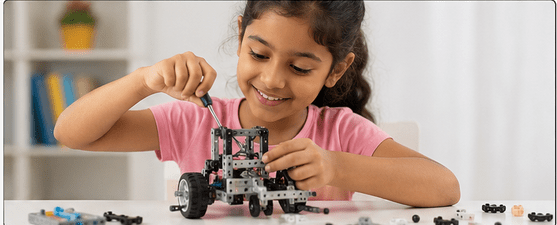
As parents, you might assume science is hard because the content is complex. But the real barrier runs deeper than that. Science requires a child to:
If you think practically, it is not possible for a person to carry everything without being trained. To perform these child brain development activities and mental math training for kids is needed, which most school systems simply do not prioritize early enough.
Earlier, the children did not have as many distractions as they have now. Today, building the foundation in science with just school courses feels like climbing a wall with no handholds. But now you can do things like enrolling your child for early learning at Jainam STEM classes, which not only work on science but also give a complete boost in science, technology, engineering, and maths.
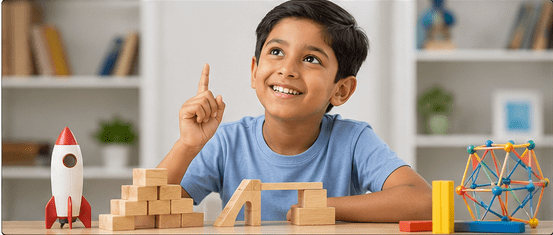
Children’s brains are more adaptable during their early learning years. This is the stage when habits, attention span, memory patterns, and problem-solving abilities develop the fastest. When a child is introduced to structured STEM activities early, science no longer feels like a difficult school subject. It becomes something they naturally explore with curiosity and confidence.
Early exposure also reduces fear of failure because children learn through experiments, games and hands-on challenges instead of pressure and memorisation. As time passes, these practices create stronger analytical thinking and better classroom participation in your child.
After several feedback from smart parents, we understood that children who receive structured memory improvement classes for kids and brain training in their early years perform significantly better across all STEM subjects, and not just science.

Science is not the enemy. A brain that has not been trained yet is the challenge that is completely fixable for your kid.
Every child who struggled with science and found the right kind of support has a story that sounds the same: the moment something clicked, everything changed. Their grades improved, yes, but more importantly, their child brain development activities caught up, their confidence soared, and they started seeing themselves as capable. That moment can happen for your child, too all you need to do is choose the best. Enroll your child in Jainam STEAM program today.
No, you are not late. The brain remains highly adaptable well into adolescence. What changes with age is the speed of results, not the possibility of them. So, you are not late; your child will need a little more time than he would have needed if enrolled earlier.
A science tutor will help your child understand just the academic lessons. Jainam STEM program fixes the underlying reason the lesson was hard in the first place. We train focus, working memory, and mental math training for kids so that every future science lesson and every subject become easier.
Most kids who “hate science” hate feeling slow and confused, not science itself. Jainam STEM is taught through logical activities, challenges, and visible progress milestones. Within a few weeks, children’s shift in attitude is usually the first thing parents notice.
Yes, our online learning programs USA families attend are fully live, interactive sessions, not pre-recorded videos. Your child gets real-time feedback from an instructor, just like an in-person class, from the comfort of home.
Most parents notice a change in attitude and focus within the first 4 weeks. Measurable academic improvement, better test scores, more class participation, less homework resistance typically shows up between weeks 6 and 10.